|
|
|
|
August 21, 2025
|
Hackers Infiltrate Alleged North Korean Operative’s Computer, Leak Evidence of...
|
|
August 21, 2025
|
Ecosia Proposes Unusual Stewardship Model for Google Chrome
|
|
August 21, 2025
|
OpenAI Presses Meta for Evidence on Musk’s $97 Billion Takeover Bid
|
|
August 15, 2025
|
ChatGPT Mobile App Surpasses $2 Billion in Consumer Spending, Dominating Rivals
|
|
|
Redwood Materials Repurposes EV Batteries to Power AI Data Centers
July 8, 2025
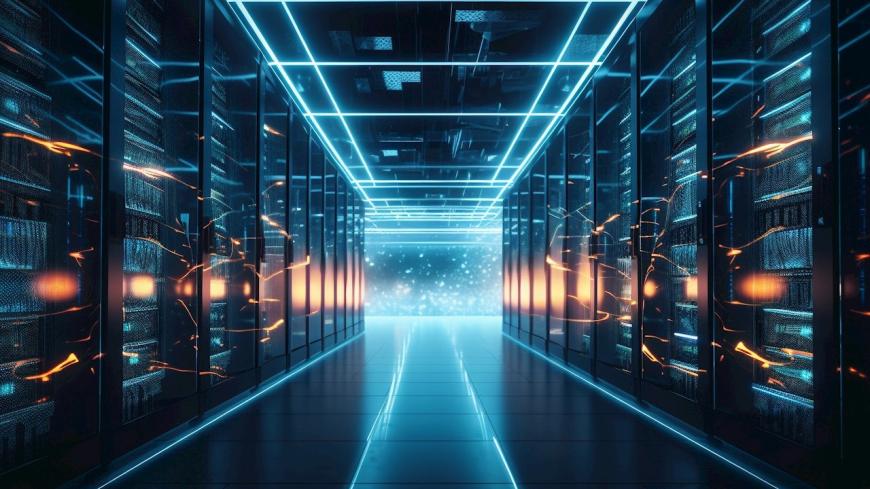 In a move that bridges two of the most transformative tech trends — electrification and artificial intelligence — Redwood Materials has launched a new initiative aimed at reusing electric vehicle (EV) batteries to power AI data centers. The new division, Redwood Energy, will use these batteries to store solar energy and support the growing power needs of Redwood’s data center partner, Crusoe, known for its expansive AI-focused campus in Abilene, Texas.
Second Life for EV Batteries
Redwood, a leader in EV battery recycling, already collects over 20 GWh of batteries annually — the equivalent of around 250,000 electric vehicles. Surprisingly, a significant portion of these batteries still retain more than 50% of their original capacity, making them suitable for reuse before being fully recycled.
Rather than immediately processing them for raw materials, Redwood is opting to give these batteries a second life as stationary energy storage units. These repurposed packs are ideal for applications that don’t require rapid discharge or high peak performance — making them a cost-effective alternative to new battery systems for grid or backup power.
“Producing a new battery consumes far more energy than continuing to use an existing one,” said Sam Abuelsamid, VP of market research at Telemetry Insights. “So this is a smart, sustainable step that makes both economic and ecological sense.”
A New Energy Backbone for AI Infrastructure
AI data centers are facing a power crunch. With demand for compute skyrocketing — especially for training and running large-scale AI models — data centers are consuming vast amounts of electricity. Analysts project that U.S. data centers could account for up to 12% of the country’s total energy use by 2028, more than double current levels.
Grid expansion, however, is not keeping pace. Permitting and building new power plants or transmission infrastructure can take years. In contrast, Redwood’s battery-based systems can be deployed in a matter of months, offering a fast and scalable solution to bridge the gap between demand and grid capacity.
Gene Munster, managing partner at Deepwater Asset Management, noted that Redwood’s system is modular and resilient. Batteries showing signs of degradation can be hot-swapped without interrupting operations, ensuring high uptime and flexibility — two critical factors for AI facilities.
Lower Costs, Faster Deployment
Redwood claims that its second-life battery systems can be built in half the time and at roughly half the cost of conventional lithium-ion storage projects. These advantages make them especially appealing to hyperscalers and data center operators that are racing to expand capacity.
By leveraging its established logistics and testing infrastructure, Redwood is able to source and integrate battery packs from multiple automakers, including those with mixed chemistries. Once these packs reach the true end of their lifecycle, Redwood will recycle them — recovering materials and feeding them back into the battery manufacturing ecosystem.
Performance and Trust Still Key
Despite the clear advantages, some analysts urge caution. Used batteries may degrade unpredictably, and performance can vary between units. That said, data collected over the past few years shows that batteries in stationary, climate-controlled environments tend to degrade more slowly than those used in vehicles.
“Big tech companies are cautious when it comes to uptime,” said Mark N. Vena, president at SmartTech Research. “But if Redwood can prove its reliability at scale, the sustainability and cost benefits could drive adoption.”
Wyatt Mayham of Northwest AI Consulting pointed out a key tension: “Data centers are going up in 18 months. Transmission infrastructure takes 5 to 10 years. Redwood’s model helps solve that timeline mismatch.”
A Strategic Response to Policy and Market Shifts
Redwood is also well-positioned to capitalize on regulatory and market shifts. With EV tax credits phasing out and growing pressure to reduce carbon footprints, many companies are actively exploring ways to integrate renewable and recycled energy solutions into their operations.
Edward Sanchez, a senior analyst at TechInsights, summarized the opportunity well: “Data centers are power-hungry. Using second-life EV batteries as part of the power solution allows companies to reduce environmental impact without sacrificing performance.”
What’s Next?
Redwood’s innovation may prove to be a turning point in both battery lifecycle management and data center sustainability. As AI continues to drive exponential increases in energy use, scalable storage solutions like these could become a core part of the tech stack — not just a stopgap.
If Redwood succeeds in building trust around the performance of used battery systems, this approach could transform how we think about energy storage — turning yesterday’s EVs into tomorrow’s energy infrastructure.
|
|
|
Sign Up to
Our Newsletter!
Get the latest news in tech.
|
|
|
