|
|
|
|
August 21, 2025
|
Hackers Infiltrate Alleged North Korean Operative’s Computer, Leak Evidence of...
|
|
August 21, 2025
|
Ecosia Proposes Unusual Stewardship Model for Google Chrome
|
|
August 21, 2025
|
OpenAI Presses Meta for Evidence on Musk’s $97 Billion Takeover Bid
|
|
August 15, 2025
|
ChatGPT Mobile App Surpasses $2 Billion in Consumer Spending, Dominating Rivals
|
|
|
RealSense Spins Out of Intel With $50M to Bring Depth Perception to the Physical World
July 11, 2025
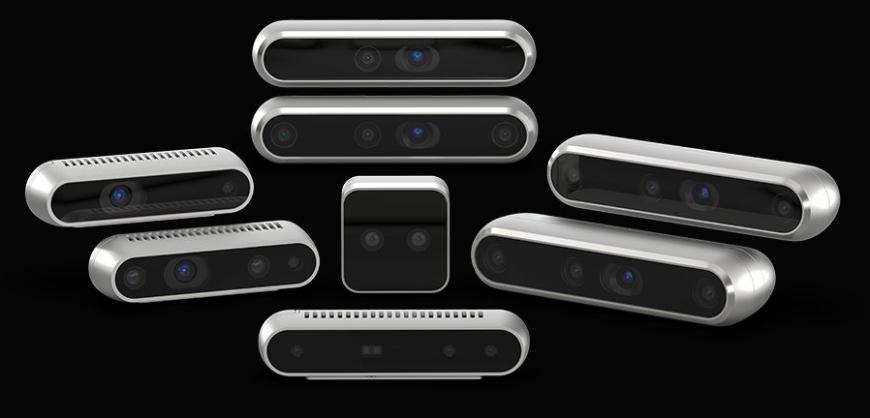 After 14 years under the wing of semiconductor giant Intel, RealSense is now going solo. The 3D camera technology company, known for its stereoscopic imaging systems, has officially spun out as an independent startup and raised a $50 million Series A round to accelerate its growth and product innovation.
RealSense builds depth-sensing cameras that allow machines to “see” the world in three dimensions — using a combination of dual-angle imagery and infrared light. This enables devices like robots, drones, autonomous vehicles, and smart cameras to understand and respond to their physical surroundings with high accuracy. It’s also used for facial authentication and security applications.
“The common denominator is that all our customers operate in the real, physical world,” said CEO Nadav Orbach in an interview with TechCrunch. “They need real-time, high-fidelity 3D awareness to navigate or interact with their environment — and that’s exactly what our technology provides.”
Orbach has been with Intel since 2006, starting as a CPU architect in Israel. He pivoted to vision systems in 2011 and became Intel’s GM of Incubation and Disruptive Innovation in 2022 before relocating to San Francisco. RealSense grew out of Intel’s internal R&D efforts, and while early experiments ranged from gesture recognition for consumer electronics to mobile applications, the company eventually found its niche in robotics and industrial automation.
Over time, however, RealSense’s cameras began attracting interest from sectors well outside of traditional robotics. Fish farms used them to measure volumes inside pens. Chipotle, in partnership with AI restaurant platform PreciTaste, used them to monitor food inventory levels. According to Orbach, RealSense now serves over 3,000 customers across industries, with growing demand fueled by recent advancements in AI and machine learning.
“AI is making robotics smarter, and that has massively boosted interest in our 3D tech,” Orbach noted. “But to keep up, we had to evolve.”
Recognizing the opportunity to scale more aggressively, RealSense initiated plans in 2023 to spin out of Intel. With the support of then-CEO Pat Gelsinger, the transition was greenlit. As an independent entity, RealSense has closed a $50 million Series A led by Intel Capital and other unnamed strategic investors.
“For me, this was personal and transformational,” said Orbach. “It’s the first time I’ve had to pitch investors as a CEO. It was humbling but exciting — and with our seasoned team, I knew we could do it.”
Now untethered, RealSense is focused on building out its go-to-market team, improving its core technology, and expanding into new applications — particularly those related to human-robot interaction safety and automated access control.
A big part of the company’s roadmap involves enhancing its depth-sensing precision and reliability, especially in complex or dynamic environments. That could mean smarter factory robots that can work side-by-side with humans or more secure systems that can verify identities without physical contact.
“There’s definitely a learning curve when you step out of a big company,” Orbach admitted. “But I’m incredibly proud of the team we’ve built. Many of them have entrepreneurial experience, and combined with my own background, I think we have the right formula to make this work.”
For Orbach, the spinout marks a personal milestone as well as a professional one: “This is a dream come true — turning 14 years of innovation into something that now has the freedom to grow.”
|
|
|
Sign Up to
Our Newsletter!
Get the latest news in tech.
|
|
|
