|
|
|
|
August 21, 2025
|
Hackers Infiltrate Alleged North Korean Operative’s Computer, Leak Evidence of...
|
|
August 21, 2025
|
Ecosia Proposes Unusual Stewardship Model for Google Chrome
|
|
August 21, 2025
|
OpenAI Presses Meta for Evidence on Musk’s $97 Billion Takeover Bid
|
|
August 15, 2025
|
ChatGPT Mobile App Surpasses $2 Billion in Consumer Spending, Dominating Rivals
|
|
|
Zuckerberg Bets Big on AI Glasses as the Future of Human-Computer Interaction
July 30, 2025
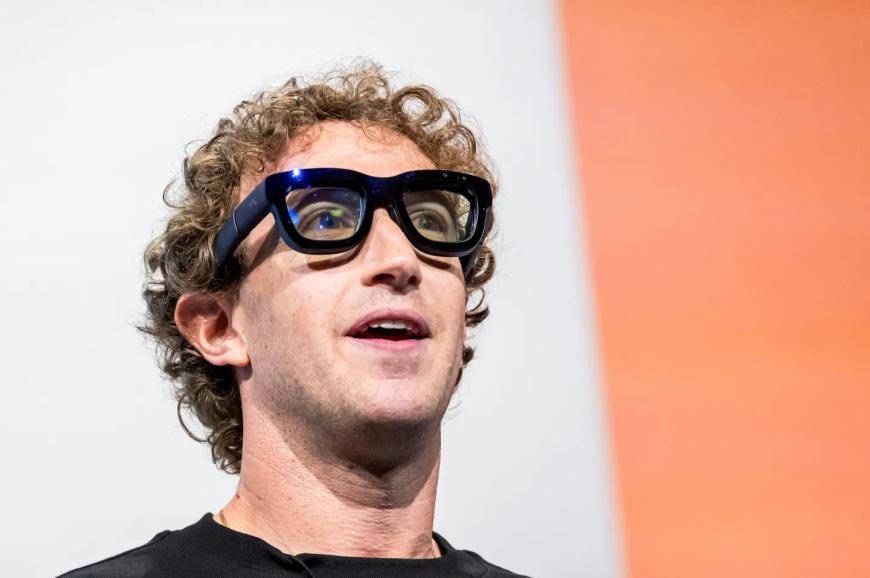 Meta CEO Mark Zuckerberg is doubling down on his belief that smart glasses — not smartphones or laptops — will become the primary interface for interacting with artificial intelligence in the years ahead.
Speaking during Meta’s second-quarter earnings call, Zuckerberg described AI-enabled glasses as the “ideal form factor” for future computing. His remarks echoed a blog post published earlier the same day, in which he discussed how superintelligent AI will reshape the way people interact with technology.
“I continue to think that glasses are basically going to be the ideal form factor for AI, because you can let an AI see what you see throughout the day, hear what you hear, [and] talk to you,” Zuckerberg told investors. Adding displays to those glasses — whether small and practical or wide and holographic — will dramatically increase their value, he said.
He went a step further, predicting that people without such AI-enhanced eyewear may one day face a “significant cognitive disadvantage” compared to those who use them.
Meta has been pushing hard into the wearables space with products like its Ray-Ban Meta smart glasses and a newer collaboration with Oakley. These devices already let users capture photos and videos, listen to music, and query Meta’s AI about what’s happening around them. The products have gained surprising traction — Ray-Ban Meta sales tripled year-over-year, according to eyewear giant EssilorLuxottica.
Still, Zuckerberg believes the best is yet to come, especially with displays that bridge the physical and digital worlds. He pointed to Meta’s long-term investments in its Reality Labs division, which has poured resources into advanced AR research, including Meta’s upcoming Orion AR glasses.
“This is … what we’ve been maxing out with Reality Labs over the last 5 to 10 years — basically doing the research on all these different things,” he said.
Reality Labs remains a major cost center for Meta, posting a $4.53 billion loss in Q2 alone, and nearly $70 billion in total losses since 2020. But Zuckerberg is framing the unit not as a sunk cost, but as a strategic bet on the next wave of consumer computing.
Other players are also eyeing this emerging space. Earlier this year, OpenAI acquired a startup led by former Apple design chief Jony Ive in a $6.5 billion deal to develop new AI-centric consumer hardware. Meanwhile, startups like Humane and Limitless have experimented with form factors ranging from AI pins to pendants, though not always successfully.
Despite the competition, glasses may have a natural edge: people already wear them, they blend in socially, and they’re ideally suited for merging the physical and digital.
“The other thing that’s awesome about glasses is they are going to be the ideal way to blend the physical and digital worlds together,” Zuckerberg said. “So the whole Metaverse vision, I think, is going to … end up being extremely important, too, and AI is going to accelerate that.”
Whether glasses truly become the next great computing platform remains to be seen. But for now, Zuckerberg is betting the future of AI — and Meta — will be worn on your face.
|
|
|
Sign Up to
Our Newsletter!
Get the latest news in tech.
|
|
|
