|
|
|
|
August 21, 2025
|
Hackers Infiltrate Alleged North Korean Operative’s Computer, Leak Evidence of...
|
|
August 21, 2025
|
Ecosia Proposes Unusual Stewardship Model for Google Chrome
|
|
August 21, 2025
|
OpenAI Presses Meta for Evidence on Musk’s $97 Billion Takeover Bid
|
|
August 15, 2025
|
ChatGPT Mobile App Surpasses $2 Billion in Consumer Spending, Dominating Rivals
|
|
|
Former Apple Engineer Builds Defense Tech Startup in Greece to Challenge Europe’s Fragmented Military Market
July 29, 2025
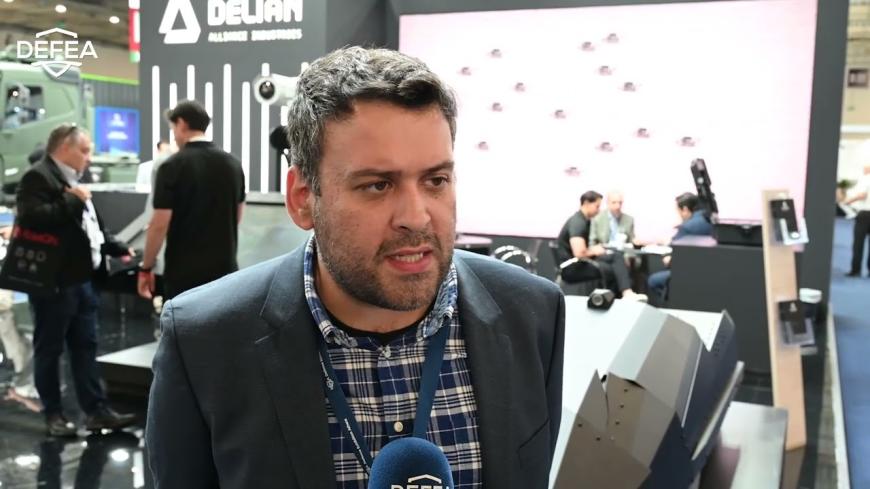 In a bold departure from Silicon Valley norms, Dimitrios Kottas left a high-profile engineering role at Apple’s Special Projects Group in 2021 to return to his native Athens and build a defense startup. Now, three and a half years later, his company, Delian Alliance Industries, is quietly reshaping Greece’s defense infrastructure — and taking aim at the broader European market.
Delian has already deployed solar-powered surveillance towers that monitor Greece’s borders and detect wildfires on remote islands. But the company’s most ambitious technologies lie just beneath the surface — literally. Its “Interceptigon” line includes autonomous aerial and sea drones, including a suicide vessel that remains dormant on the seafloor until remotely activated, emerging undetected to neutralize threats. The vessel is designed to be manufactured at scale using commercial off-the-shelf materials, keeping costs low while maximizing impact.
While the tech is impressive, Kottas’ real gamble is broader: that a small Greek startup can crack Europe’s notoriously fragmented defense market, long dominated by large, state-backed players and shaped by political and national loyalties.
A veteran in autonomy and sensing technologies, Kottas spent six years at Apple working on systems involving cameras, lidar, and radar, and brought those insights directly into Delian’s focus on machine perception for future defense systems. “At the heart of autonomy is perception,” Kottas said. “Given autonomy is going to be at the heart of all future weapon systems, that’s the core technology that’s going to drive change.”
Delian recently raised $14 million in fresh funding from Air Street Capital and Marathon Venture Capital, bringing its total to $22 million — a sizable sum for a European defense startup. Yet even with this traction, scaling across Europe poses a steep challenge. Kottas pointed to long-standing U.S. pressure on European countries to buy American-made weapons, and acknowledged that local favoritism — especially in countries like France — can shut out smaller players.
Still, he sees signs of change. Initiatives like the EU’s Safe and ReArm Europe are pushing for more cross-border defense cooperation, and companies like Tekever (Portugal) and Quantum Systems (Germany) are proving that European startups can compete globally — even with far less funding than their U.S. counterparts.
Delian’s business model echoes early moves by U.S. defense startup Anduril, which began by selling AI-augmented surveillance towers to the U.S. government. But Kottas believes Delian has found its own edge: a focus on low-cost, pre-deployable systems that can be manufactured quickly and in large volumes — a necessity in a continent now acutely aware of its geopolitical vulnerabilities.
What sets Kottas apart may be his deep personal stake in the work. “It’s different to build weapons in New Mexico that are going to be used on the other side of the planet,” he said. “It’s different to build something that you know may be used to save your brother or your sister or your neighbor.”
This local perspective drives Delian’s urgency and focus. Rather than aiming to build the next stealth jet, the startup is betting on pragmatic, deployable tools that Europe needs today — especially in regions facing direct border threats or climate-driven disasters.
Kottas recently submitted a bid for a German defense tender, a litmus test for his belief that superior technology — not nationality — should dictate security partnerships in modern Europe.
“If you build a company in a small, fragmented market, it forces you to be more resilient, more efficient,” he said. “I do think fragmentation will be overcome in the coming years, and you can turn it to your advantage if you play it right.”
Whether Delian becomes Europe’s answer to Anduril or not, its story captures a broader shift: the rise of mission-driven defense startups emerging from unexpected places, ready to challenge decades-old systems with new ideas and smarter tech.
|
|
|
Sign Up to
Our Newsletter!
Get the latest news in tech.
|
|
|
